
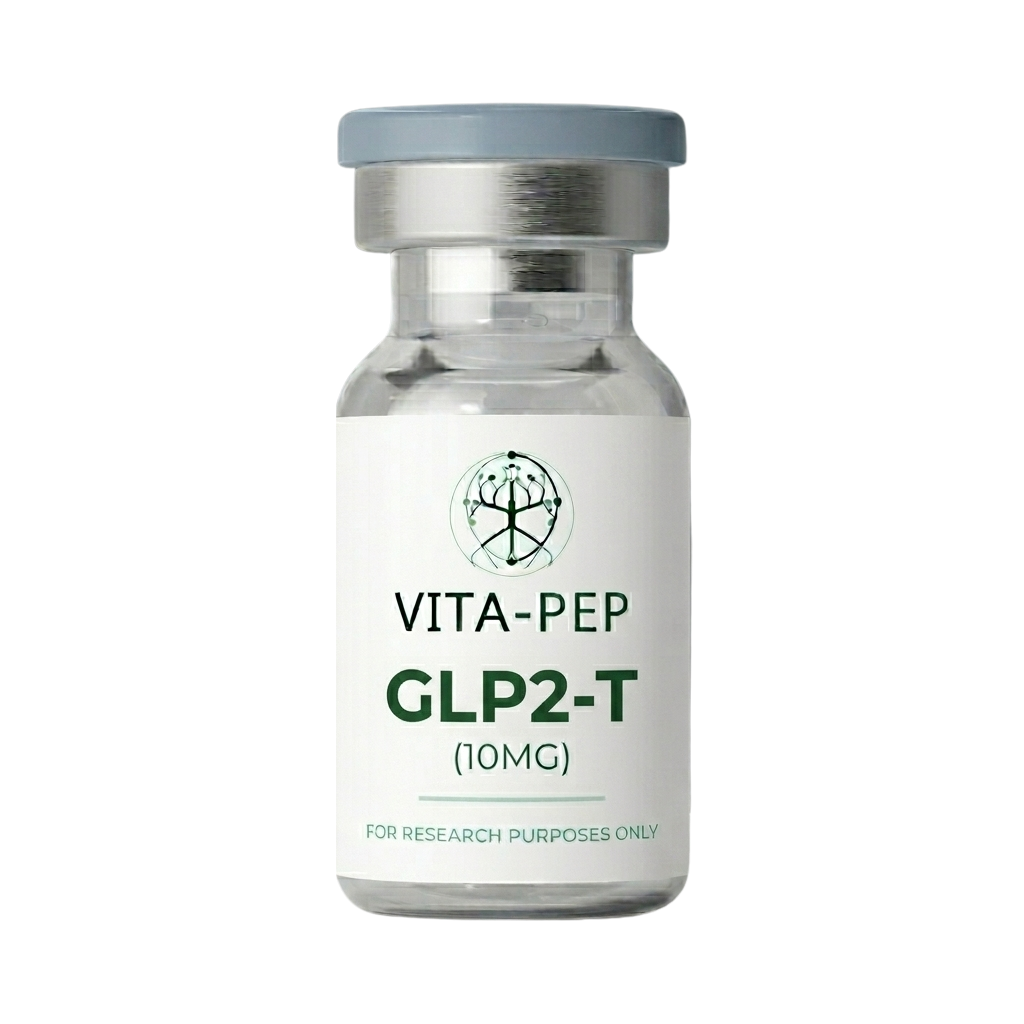

GLP2-T is a synthetic dual-agonist peptide developed to engage both GLP-1 and GIP receptors in research settings, commonly utilized to investigate metabolic function and glucose regulation.
Product Care & Storage:
- Shipping & Stability — All products are lyophilized prior to shipping, maintaining stability in transit for up to 3–4 months. Reconstitution with bacteriostatic water is required before research use.
- Lyophilized / Powder Form — Store in a cool, dry location away from direct light. Room temperature storage is suitable for several weeks. For long-term preservation spanning months to years, freezing is recommended to best maintain potency and integrity.
- Reconstituted Form — Once mixed, refrigerate below 39°F. Stability is maintained for up to 30 days.
- Usage — We are unable to provide dosing guidance; however, all products are considered pharmaceutical grade.
- Disclaimer — This product is intended strictly for research purposes and is not approved for human consumption, clinical treatment, or diagnostic use. Standard laboratory safety protocols should be observed at all times when handling peptides.